
Physics and Computer Science Faculty Advance NASA Research Through Artificial Intelligence, Innovative Computing, and Satellite Technology
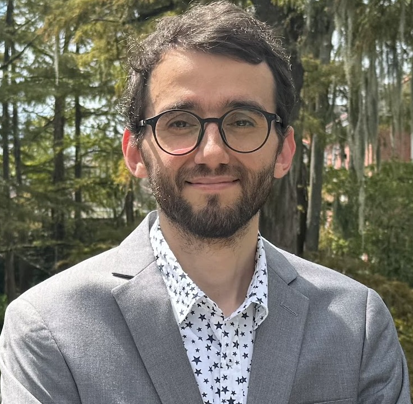
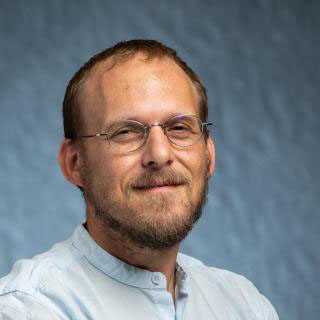
The Ray P. Authement College of Sciences at the University of Louisiana at Lafayette is continuing to expand its contributions to cutting-edge research through innovative projects involving artificial intelligence, emerging computing technologies, and satellite systems.
Recent accomplishments by Dr. Sercan Aygün of the School of Computing and Informatics and Dr. Erez Aghion of the Department of Physics demonstrate the breadth of NASA-related research taking place within the College. Their work applies advanced computational methods, machine learning, and physics-informed approaches to address challenges ranging from flood monitoring and environmental resilience to the autonomous operation of Earth-observing satellites.
Dr. Sercan Aygün Explores Innovative Computing for Flood Analysis
Dr. Sercan Aygün, Assistant Professor in our School of Computing and Informatics, and his collaborators have been recognized through NASA's Beyond the Algorithm Challenge: Novel Computing Architectures for Flood Analysis.
Their project, “Quantum Hyperdimensional Computing for Surface Water Signatures,” explores a novel approach to improving flood mapping and surface water detection through emerging computing technologies. The interdisciplinary team—including Dr. Aygün, M. Hassan Najafi, Mehran Moghadam, and Abu Masum—proposed combining quantum-inspired encoding with hyperdimensional computing to analyze satellite imagery and identify surface water signatures.
Their innovative approach is designed to remain effective under challenging environmental conditions, including noise and haze, while supporting fast and energy-efficient deployment on edge computing hardware. These capabilities will make it possible to bring advanced computational analysis closer to where data is collected, reducing the need to transfer large amounts of information to centralized computing systems.
Accurate and efficient flood analysis has the potential to play an important role in disaster preparedness, environmental monitoring, and community resilience. Dr. Aygün's work demonstrates how artificial intelligence and emerging computing technologies can be applied to address complex, real-world challenges. His research focuses on developing unconventional computing methods that can make artificial intelligence systems faster, more energy-efficient, and better suited for deployment in real-world environments. Through his tiny Machine Learning and Embedded Computing (tML-EC) Laboratory, Dr. Aygün and researcher team investigate innovative approaches including hyperdimensional computing, stochastic computing, embedded systems, and TinyML.
Dr. Erez Aghion Advances Autonomous Satellite Capabilities Through Machine Learning
Dr. Erez Aghion of our Department of Physics is leading a NASA-supported research project focused on improving the situational awareness, resilience, and autonomous operation of Earth emissions monitoring satellites. The project will develop a physics-informed machine learning control scheme designed to improve how satellites identify and respond to potential anomalies within their power systems.
A central component of the research will be the creation and analysis of a digital twin of UL Lafayette's CubeSat. A digital twin is a virtual representation of a physical system that allows researchers to model its behavior, test different scenarios, and identify potential problems without placing the actual satellite at risk. Using this digital environment, Dr. Aghion and his research team will investigate methods to identify, classify, and mitigate anomalous power system behaviors. The goal is to develop intelligent and autonomous systems capable of recognizing potential problems and responding more effectively without requiring immediate intervention from ground-based operators.
Improving the resilience of satellite power systems is particularly important for Earth-observing missions that depend on reliable and continuous operation. By reducing the need for ground intervention and strengthening autonomous capabilities, the research could help improve the reliability of satellites used to monitor greenhouse gas emissions and other critical environmental data.
The research directly supports NASA's mission by advancing autonomous satellite technologies while creating new opportunities for research collaboration and innovation at UL Lafayette. The project has received a total award of $124,123, supporting research activities including personnel, travel, and the development of this innovative approach to satellite system monitoring and control.
Advancing NASA-Related Research Across the College of Sciences
Together, the work of Drs. Aygün and Aghion illustrates the increasingly interdisciplinary nature of modern scientific research.
Dr. Aygün's work brings together artificial intelligence, machine learning, satellite imagery, and emerging computing architectures to improve the analysis of environmental data. Dr. Aghion's research combines physics, machine learning, control systems, and space technology to improve the reliability and autonomy of satellites monitoring Earth's environment.
Both projects demonstrate the potential of artificial intelligence and machine learning to transform how scientists collect, analyze, and respond to complex information.
From identifying surface water signatures in satellite imagery to detecting anomalies within satellite power systems, these research efforts highlight the important role advanced computing will play in the future of environmental monitoring and space-based science.
Building the Future of Research and Innovation
The accomplishments of Drs. Aygün and Aghion reflect the strength and diversity of research within the Ray P. Authement College of Sciences. Their work demonstrates how faculty across disciplines are pursuing innovative solutions to complex scientific and technological challenges while creating new opportunities for collaboration, student engagement, and discovery.
As UL Lafayette continues to expand its research enterprise, projects such as these position the College of Sciences to contribute to important national and global priorities in artificial intelligence, environmental monitoring, space technology, and scientific innovation. Please join us at the Ray P. Authement College of Sciences in congratulating Drs. Sercan Aygün and Erez Aghion on their outstanding accomplishments and in anticipation of the continued impact of their research.