
In spite of the heavy rain, many alumni joined us for an alumni donor appreciation crawfish boil on the afternoon of
Renewed Hope for Coastal Marshes in Louisiana
Thu, 02/14/2019 - 3:00pm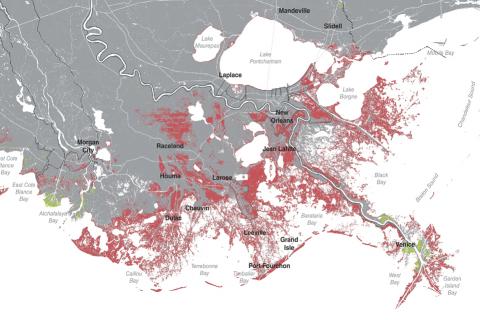
Top Stories
Students Sink Teeth into New Science Museum Exhibit
A new exhibit opening 1 May 2026 at the University of Louisiana at Lafayette Science Museum is putting student creat
Louisiana’s coastal marshes once seemed endless: a vast ecosystem of lush, undulating smooth cordgrass interspersed with clusters of black mangrove and tall roseau cane. Today, the intricate charm of these marshes is disappearing at an unprecedented rate.
Paige Byerly, an NSF doctoral fellow in Paul Leberg's biology lab, and her coauthors Bethann Garramon Merkle, and Megan Hepner, just authored a popular science article about the Gulf coast and their research in the American Scientist. Read the article Renewed Hope for Coastal Marshes in Louisiana and find out more.
Paige Byerly is a National Science Foundation Graduate Research Fellow and PhD candidate at the University of Louisiana at Lafayette, where she studies the influences of human activities on island-nesting marsh and seabirds. She has spent three years slogging through the marsh on Whiskey Island.
Photo information: Without the interventions that are underway or under consideration, Louisiana will continue to lose land at extraordinary rates. The map shows the land that would be lost over the next 50 years if no action is taken, according to the state’s 2017 Coastal Master Plan. Coastal Protection and Restoration Authority map.